
Our Founding Elders
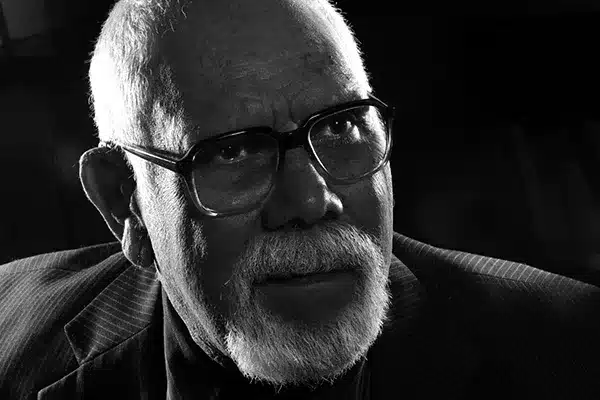
Vale Uncle Lester Bostock
Uncle Lester Bostock OAM was the Founding Elder and long-time Board member of both FPDN and the Aboriginal Disability Network NSW. Uncle Lester passed away in November 2017. We pay our respects to him as our Founding Elder and acknowledge his tireless work over decades to progress the rights and opportunities of Aboriginal people.
Uncle Lester was a proud Bundjalung man with disability who was at the forefront of promoting and protecting the human rights of Aboriginal people with disability in Australia over several decades.
Lester publicly introduced the concept of “double disadvantage” and how it relates to Aboriginal people with disability in 1991 when he gave the Meares Oration entitled “Access and equity for people with a double disadvantage”.
Uncle Lester is widely recognised as one of the pioneers of Aboriginal media in Australia.Uncle Lester received numerous awards for community service over the years including a Centenary Medal, the NSW Law and Justice Foundation Award for Aboriginal Justice and in 2010 Uncle Lester was the NAIDOC Elder of the year.
Read Uncle Lester’s Eulogy and tribute.
Photo by Belinda Mason OAM, Unfinished Business.
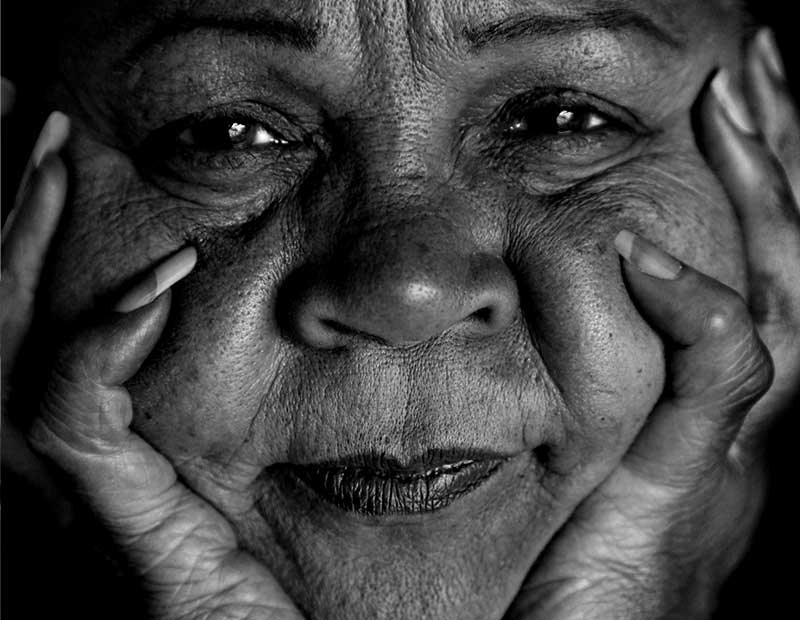
Vale Aunty Gayle (Leila) Rankine
Aunty Leila Gayle Rankine was Chairperson since the formal constitution of the First Peoples Disability Network in 2014. Her advocacy for people with disability goes back to the very beginning of our social movement. She was also widely known and respected as a leading voice for all Australians with disability.
Aunty Gayle was a Ngarrindjeri woman born in Raukkan (Point McLeay Mission) on Lake Alexandrina in South Australia.
Aunty Gayle represented Australia and FPDN at the United Nations in Geneva and New York.
Aunty Gayle was recognised for her extensive knowledge of the needs of people with disability across urban, rural and remote communities. She had a lived experience as a person with physical disability and as a carer of relatives with physical and neurological disability, including autism. Read Aunty Gayle’s Eulogy and tribute.
Photo by Belinda Mason OAM ©
Our Board

Aunty Kay Sadler
Chairperson
Chairperson Kay Sadler is a Worimi woman of the Biripi nation born on the Pacific Highway, ten kilometres south of Taree.
Kay is a delegate to the National Congress of Australia’s First Peoples and a member of the Biripi Land Council. With lived experience of disability, Aunty Kay has dedicated much of her life to championing the rights of Aboriginal and Torres Strait Islander people with disability, particularly in rural and remote communities where access and inclusion are ongoing challenges.
As Board Chair, Aunty Kay provides strong cultural leadership and deep community insight. Her advocacy is driven by a commitment to justice, cultural safety and self-determination. Aunty Kay’s wisdom, warmth and tireless dedication continue to inspire and shape the work of FPDN and the broader movement for disability rights and inclusion.

Uncle Paul Calcott
Director
Uncle Paul Calcott is a proud Wiradjuri man and a long-time advocate for the rights and inclusion of First Nations people with disability. With lived experience of disability himself, Uncle Paul brings deep cultural knowledge and personal insight to his work, helping to create spaces where First Peoples with disability feel seen, heard and valued. He is a passionate artist and uses art as a powerful tool for healing, storytelling and connection within communities.
At FPDN, Uncle Paul plays a leading role in community engagement, cultural training and policy advocacy. His work is grounded in the principles of self-determination, respect and cultural safety. Through his leadership, creativity and unwavering commitment, Uncle Paul continues to drive change and foster understanding across the disability and broader community sectors.

Aunty Maureen Logan
Director
Aunty Maureen Logan is a proud Gamilaraay woman and a respected Elder with decades of experience advocating for the rights and wellbeing of Aboriginal and Torres Strait Islander peoples, particularly those living with disability. Her lifelong commitment to social justice is grounded in community, cultural knowledge, and lived experience, making her a powerful voice for change and inclusion.
As a Board Member, Aunty Maureen brings wisdom, leadership and a deep understanding of the unique challenges faced by First Nations people with disability. She plays a vital role in guiding the organisation’s strategic direction and ensuring cultural integrity is embedded across all areas of FPDN’s work.

Auntie Paula Wootton
Director
Auntie Paula Wootton is from Dharawal Country of the Yuin Nation on the South Coast of New South Wales and has lived on Gubbi Gubbi Country for almost 30 years. She has worked with and for Community for more than 25 years across Gympie, the Sunshine Coast, surrounding areas and Brisbane. Auntie Paula has a disability and has also cared for her son, who has a disability. She is passionate about representing Community, bringing their stories and priorities to government and advocating for change that responds to the needs of Mob.
Auntie Paula has been a Director of Maangoor Dja, also known as North Coast Aboriginal Corporation for Community Health (NCACCH), since 2007 and is currently serving her second term as Chair. She is a Co-Chair and founding member of Mob 4 Mob and a Director of Murri’s on the Move. She brings strong experience in strategic planning and business governance, as well as longstanding relationships and partnerships across Community.
Joshua Pether
Director
Joshua Pether is a Kalkadoon artist, experimental performance maker, dancer, choreographer and disability advocate whose practice is shaped by the intersection of First Nations culture and disability. Recently based on Noongar Country in Western Australia, his work has been presented nationally and internationally, including the acclaimed solo works Monster and Jupiter Orbiting, and the long-term cultural project The Reckoning. A former artist-in-residence at HIAP Helsinki, Joshua has received support from Creative Australia and DLGSC. An influential voice in arts and disability advocacy, he speaks nationally and internationally and, in 2024, became CEO of Arts Access Victoria.
Executive Management Team
Tennille Lamb
Interim Chief Executive Officer
A Kanolu and Warrabul woman, Tennille is a highly respected First Nations leader with extensive experience working across government, national peak bodies, the disability sector and community organisations. She has led significant policy reform, strategy and advocacy work throughout her career, with a strong focus on ensuring the voices and rights of First Nations people are at the centre of decision-making.
Tennille previously held the role of Executive Director of Strategy, Policy and International at FPDN, where she worked closely with First Nations Peak bodies, Disability Representative Organisations (DROs), government and partners across Australia and internationally. She returns to FPDN with a deep understanding of the organisation, its history and its role as the national voice of First Nations people with disability.
Most recently, Tennille was Director of Policy and Research at SNAICC – National Voice for our Children, where she continued her work in advancing the rights and wellbeing of First Nations children and families.


